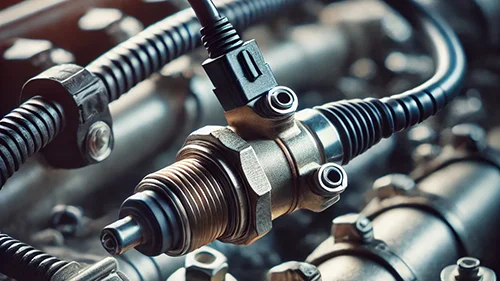
Oxygen sensors help the engine management system understand how much oxygen remains in the exhaust. A dirty or contaminated sensor may respond poorly, potentially affecting fuel control and triggering warning lights. When testing confirms that the sensor itself has deteriorated, replacement is often more dependable than attempting to clean it.
The important part is diagnosis. Similar symptoms can come from several fuel, ignition, exhaust, or wiring problems.
What an Oxygen Sensor Actually Does
Modern engines continually adjust fuel delivery according to information from several sensors. Oxygen sensors provide feedback about exhaust oxygen levels so the control system can make corrections.
Owners exploring general vehicle component references may encounter many possible causes of poor efficiency. The oxygen sensor is only one part of that larger system, so it shouldn’t automatically receive the blame whenever mileage declines.
Upstream and Downstream Sensors Have Different Jobs
Many vehicles use multiple oxygen sensors. Sensors before the catalytic converter play an important role in fuel-control feedback, while downstream sensors commonly help monitor catalyst performance.
That distinction matters because a diagnostic trouble code involving one sensor doesn’t necessarily mean every sensor needs replacement.
Signs That Deserve Investigation
Possible symptoms include a check-engine light, unstable fuel economy, rough running, failed emissions testing, or unusual engine behavior. None of these symptoms proves that contamination is responsible.
Diagnostic trouble codes provide a useful starting point. Broader garage-based repair guidance may help owners understand why reading the code is different from diagnosing the underlying fault.
A code can point toward a circuit or operating condition rather than identifying one guaranteed failed component.
Why Replacement May Beat Cleaning
Oxygen sensors operate in a harsh exhaust environment. Age, oil contamination, coolant contamination, silicone compounds, or deposits can interfere with their ability to respond correctly.
| Condition | Possible Result | Useful Check |
|---|---|---|
| Slow sensor response | Poor fuel correction | Scan-tool data |
| Wiring damage | Intermittent signal | Connector inspection |
| Exhaust leak | Misleading readings | Leak inspection |
| Contamination | Reduced performance | Diagnose source |
Cleaning isn’t a universal repair. Some contamination may indicate another engine problem that should be corrected before installing a new sensor.
General automotive service topics can provide useful background, but vehicle-specific service information remains important because sensor locations and testing procedures vary.
Diagnose Before Buying Parts
A proper diagnosis may include checking trouble codes, observing live sensor data, inspecting connectors, and looking for exhaust leaks near the sensor. Power, ground, heater-circuit, and wiring problems can sometimes imitate sensor failure.
Find the Cause of Contamination
If an old sensor is heavily coated, replacing it without understanding why can shorten the life of the new part. Oil consumption, coolant entering the combustion process, or an overly rich mixture may leave deposits.
Fixing the underlying problem protects the replacement and can prevent another warning light.
Common Replacement Mistakes
Replacing every oxygen sensor because one trouble code appeared can become expensive without solving the actual problem. Another mistake is installing the cheapest available part without confirming compatibility with the vehicle.
Drivers should also avoid repeatedly clearing trouble codes without investigating why they return. The warning light is evidence of a detected condition. Erasing it removes the visible warning temporarily, but it doesn’t correct the cause.
Frequently Asked Questions
Can a dirty oxygen sensor be cleaned?
Some people attempt cleaning, but it isn’t a dependable repair for every sensor problem. Contaminated or slow sensors may require replacement after proper testing confirms the fault.
Can a bad oxygen sensor reduce gas mileage?
It can contribute to inefficient fuel control in some situations, particularly when the engine management system receives inaccurate feedback. Other engine problems can produce similar mileage changes.
Will a new oxygen sensor immediately turn off the check-engine light?
Not always. The underlying fault must be corrected, and the vehicle’s monitoring system may need additional driving before confirming that the problem is gone.
Confirm the Fault Before Replacing the Sensor
An oxygen sensor should be treated as a measurable component rather than a part to replace on suspicion. Start with codes, inspect the surrounding system, and verify whether the sensor is responding as expected.
If testing confirms deterioration or contamination that cannot be corrected, install the proper replacement and address whatever caused the original failure.