Alloy wheels collect brake dust quickly because they sit directly beside the braking system. The dark coating can contain fine metallic particles and road grime that cling tightly to painted, polished, or coated wheel surfaces.
Cleaning dirty alloy wheels safely requires more than spraying on the strongest chemical available. Cool wheels, suitable cleaners, soft tools, and thorough rinsing reduce the chance of staining or scratching the finish.
Why Brake Dust Becomes Difficult to Remove
Every braking event creates friction at the brake pads and rotors. Small particles produced around the brakes can settle onto the wheels, where heat, moisture, and road contaminants make the buildup increasingly stubborn.
Cleaning frequently prevents layers from becoming heavily bonded. Drivers exploring vehicle maintenance articles may see many product approaches, but regular gentle cleaning is often safer than occasional aggressive treatment.
Identify the Wheel Finish
Not every alloy wheel has the same surface. Many factory wheels are painted and clear coated, while others may have polished, machined, matte, or specialty finishes.
If you’re uncertain, check the owner’s information or wheel manufacturer’s recommendations before using strong chemicals. Acidic or highly alkaline products can damage finishes they weren’t designed to clean.
| Buildup | Appearance | Cleaning Approach |
|---|---|---|
| Loose road dust | Light gray film | Shampoo and rinse |
| Brake dust | Dark coating | Wheel-safe cleaner |
| Embedded particles | Rough specks | Suitable fallout remover |
| Grease | Oily residue | Targeted degreasing |
Start With Cool Wheels and Gentle Products
Let the wheels cool completely before cleaning. Spraying chemicals onto hot metal can cause a cleaner to dry too quickly, increasing the chance of spotting or uneven reactions.
Rinse loose dirt away before touching the surface. Then apply a cleaner labeled as compatible with your wheel finish and give it the recommended working time without allowing it to dry.
Automotive directories and motoring information listings can expose owners to many detailing suggestions, but product labels should remain the controlling instructions for concentration, dwell time, and material compatibility.
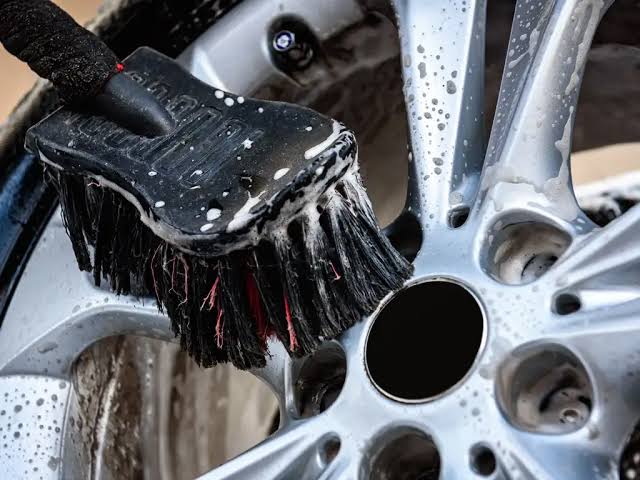
Use a soft wheel brush for spokes and a smaller brush where access is tight. Separate wheel tools from body-paint wash mitts so abrasive brake residue isn’t transferred onto painted panels.
Work on Stubborn Deposits Gradually
One cleaning pass may not remove months of buildup. A second gentle treatment is usually preferable to immediately reaching for a harsh chemical or abrasive pad.
Iron-removing products can help with embedded ferrous contamination when they’re approved for the surface involved. Rinse thoroughly afterward, including around lug holes, valve stems, and tight spoke intersections.
Some owners collect detailing ideas from broader digital resources alongside automotive material. Whatever information you compare, test unfamiliar chemicals on a small area before covering an entire wheel.
Drying the wheels afterward also helps prevent mineral spotting and makes remaining contamination easier to see.
Where Wheel Cleaning Goes Wrong
Dish detergent, household bathroom chemicals, steel wool, and abrasive kitchen pads are poor substitutes for purpose-made wheel-care products. They can dull finishes or create permanent scratching.
Leaving cleaner to dry is another common failure point. If the product begins drying, rinse it immediately rather than adding more chemical on top.
Don’t assume every dark mark is removable brake dust either. Pitting, corrosion, damaged clear coat, and permanent staining can resemble dirt but require repair rather than stronger scrubbing.
Frequently Asked Questions
How often should alloy wheels be cleaned?
Frequency depends on driving conditions and brake-dust production. Cleaning them during routine vehicle washes usually prevents heavy buildup and reduces the need for aggressive products later.
Can a pressure washer clean brake dust?
It can remove loose contamination, but high pressure alone may not dissolve bonded deposits. Keep a sensible distance and avoid directing extreme pressure toward damaged coatings or sensitive components.
Why do front wheels get dirtier?
Front brakes often handle a larger share of braking force on many vehicles, which can produce more visible brake dust at the front. Driving style and brake-pad material also affect buildup.
Keep the Cleaning Process Gentle
Brake dust is easier to control when it never gets the chance to accumulate for months. Wash wheels while they’re cool, use surface-compatible products, and rely on soft agitation instead of brute force.
If contamination remains after several careful attempts, identify whether you’re seeing embedded particles, staining, corrosion, or damaged coating before trying something stronger.