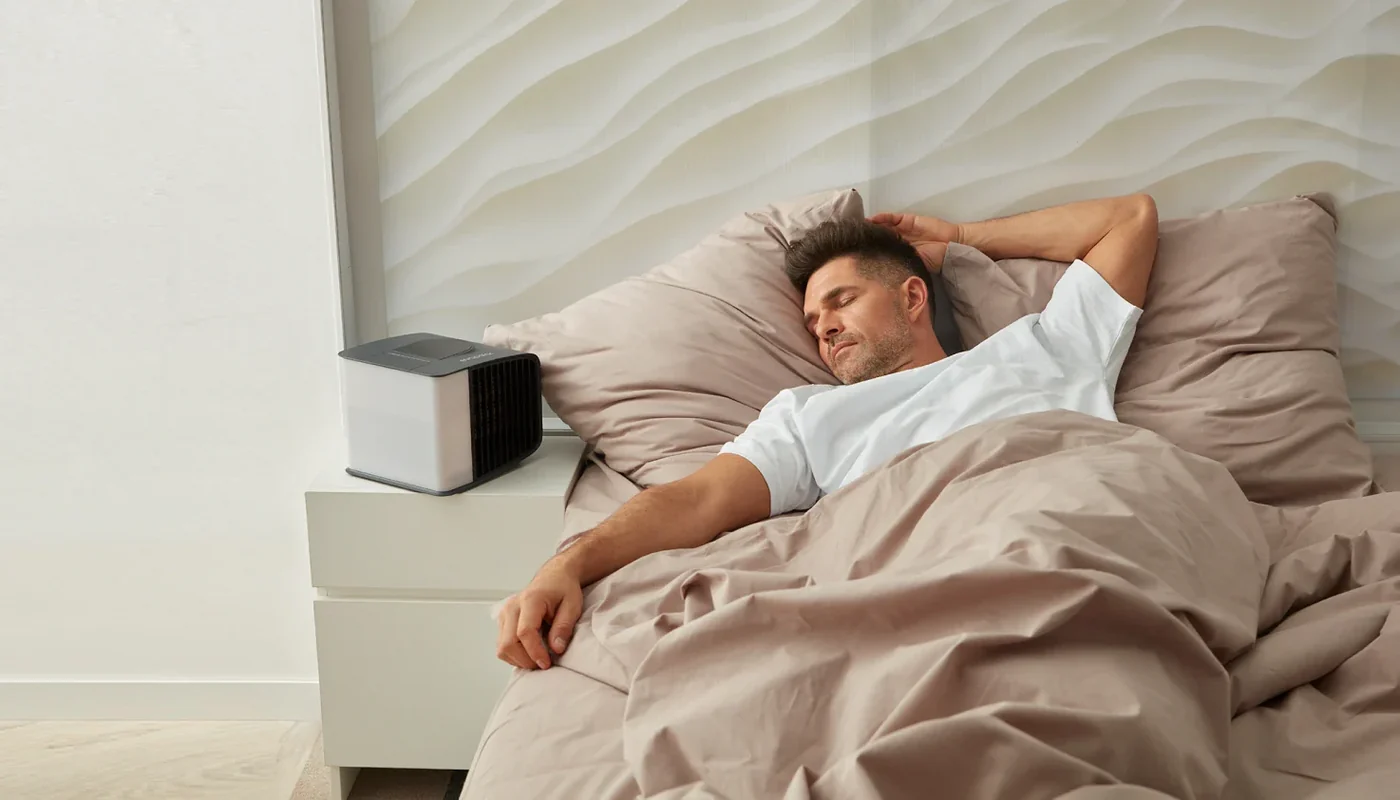
Waking sweaty doesn’t automatically mean something is medically wrong. A warm room, thick comforter, non-breathable sleepwear, or too many bedding layers can easily trap heat during the night.
Hot night sweating becomes more useful to investigate when you separate ordinary overheating from repeated, drenching sweating that happens even when your sleeping environment is comfortably cool.
Is Your Bedroom Simply Too Warm?
Start by checking the obvious sources of trapped heat. Heavy blankets, foam bedding, closed windows, poor airflow, warm sleepwear, and heating that stays high overnight can all make the bed feel much hotter than the surrounding room.
Try modest adjustments instead of making the bedroom extremely cold. Lighter bedding, breathable clothing, better air circulation, and removable layers make it easier to stay comfortable as your temperature preference changes overnight.
Change the Environment Before Chasing Complicated Fixes
If sweating happens mainly during warmer nights, room conditions deserve attention first. Test airflow, reduce unnecessary bedding, and keep heat-producing electronics away from the immediate sleeping area when practical.
People looking for explanations online may encounter broader health reading alongside clinical sources. Environmental comfort advice and medical diagnosis aren’t the same thing, so persistent unexplained sweating should not be interpreted solely through general online content.
Notice whether you wake because the room feels obviously hot or whether you find yourself soaked even though the bedroom feels cool. That distinction can guide the next step.
Use Bedding That Lets You Adjust Easily
A thick single comforter offers little flexibility. Several lighter layers allow you to remove one without leaving yourself completely uncovered, which can be useful when conditions shift overnight.
The same principle applies while exploring consumer wellness guides: simple, reversible changes are easier to evaluate than replacing everything at once.
| Pattern | Possible Explanation | What to Check First |
|---|---|---|
| Sweaty under thick covers | Trapped bedding heat | Use lighter layers |
| Hot only on warm nights | Room temperature | Improve airflow |
| Sweating despite cool room | Not clearly environmental | Track the pattern |
| Repeated soaked bedding | Possible night sweats | Consider evaluation |
Sleepwear can matter too. Clothing that holds heat or moisture against the skin may feel uncomfortable even when the room itself isn’t unusually warm.
Notice Patterns Beyond Bedroom Temperature
True night sweats are more than feeling slightly warm. NHS guidance describes them as sweating heavily enough to soak night clothes or bedding despite sleeping somewhere cool and advises medical review when they happen regularly or occur with other concerning symptoms.
Someone browsing wellness-focused reading may find many possible explanations, but the pattern is more useful than guessing at a diagnosis. Track when the sweating happens, whether bedding is soaked, and whether other symptoms are present.
For an established medical reference, see the NHS guidance on night sweats.
Where Self-Diagnosis Goes Wrong
Sweating at night has many possible explanations. Bedroom heat is common, but medicines, hormonal changes, anxiety, infections, low blood sugar, alcohol, and other conditions can also be associated with sweating.
A single sweaty night after using a heavy blanket tells you little. Repeated drenching episodes despite comfortable room conditions are different and shouldn’t automatically be blamed on bedding.
When Night Sweating Deserves Medical Attention
Arrange medical evaluation if unexplained night sweating keeps returning, wakes you regularly, or soaks clothing and bedding despite a cool room. Sweating accompanied by unexplained weight loss, fever, persistent cough, or other new symptoms also deserves attention.
Chest pain, severe shortness of breath, fainting, or another sudden serious symptom requires prompt medical assessment rather than further bedroom experimentation.
Frequently Asked Questions
Is sweating at night always considered a night sweat?
No. Becoming sweaty because the bedroom or bedding is too warm is different from repeated drenching sweating that occurs despite a comfortably cool sleeping environment.
Can changing bedding reduce overheating?
It may. Lighter, removable layers can make temperature control easier, especially if thick bedding traps excessive warmth. The result depends on room conditions and personal comfort.
Should I track repeated sweating episodes?
A brief record can be useful. Note room conditions, bedding, medications, alcohol use, other symptoms, and whether clothing or sheets become soaked. That information may help a healthcare professional assess a persistent pattern.
Respond to the Pattern, Not One Warm Night
If heat is clearly trapped around your bed, small environmental changes may make sleep far more comfortable. Keep the room comfortably cool and make bedding easy to adjust.
Repeated drenching sweating without an obvious heat-related explanation is different. If that pattern persists or comes with other symptoms, seek medical evaluation instead of continuing to cool the room further.
This article is for general informational purposes and is not a substitute for professional medical advice, diagnosis, or treatment.