
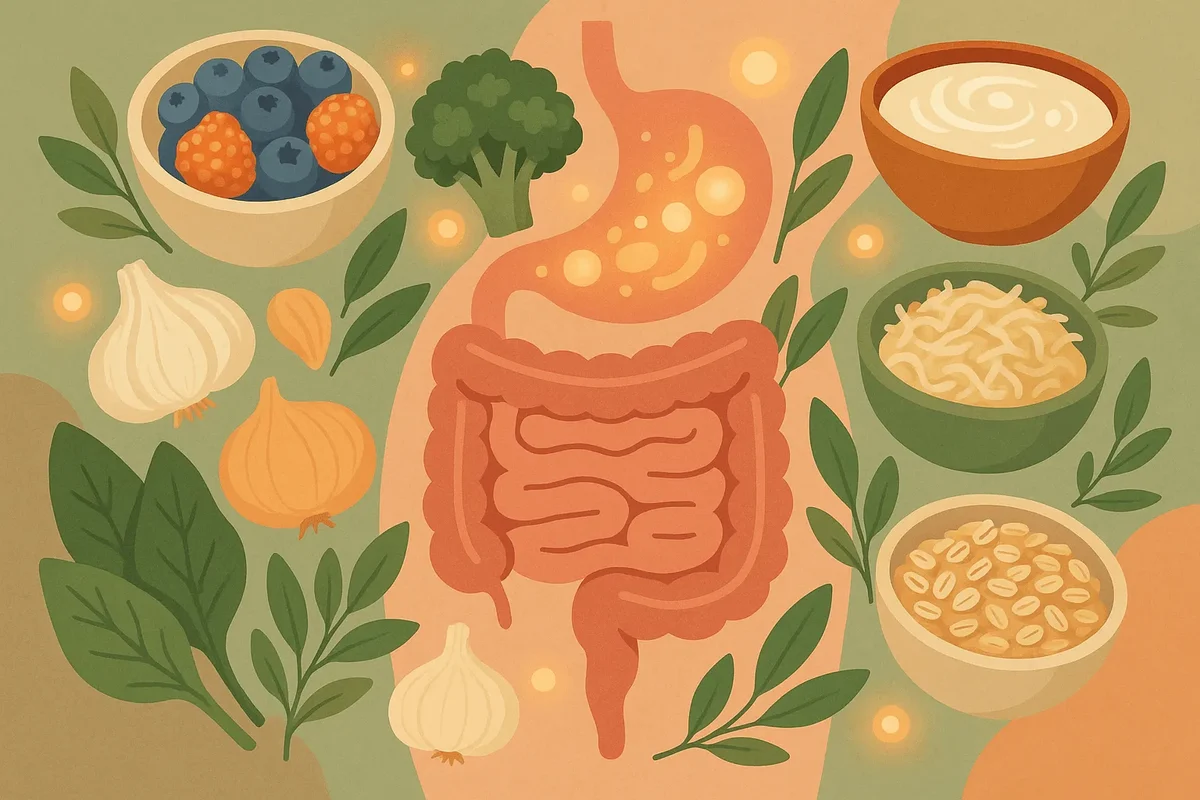
Frequent digestive bloating may improve when meals are eaten more slowly, portions are adjusted, and individual food triggers are identified instead of eliminating large groups of foods at random. Bloating has many possible causes, though, so repeated or changing symptoms deserve more attention than occasional fullness after a large meal.
What Does Frequent Bloating Actually Mean?
Bloating usually describes a feeling of abdominal fullness, pressure, or swelling. Some people also notice visible abdominal distention, while others feel bloated without a major outward change.
The National Institute of Diabetes and Digestive and Kidney Diseases explains that gas-related symptoms can include bloating, distention, belching, and passing gas. Several digestive conditions may also contribute to recurring symptoms.
That means the sensation alone doesn’t identify its cause.
Slow Down the Way You Eat
Eating rapidly can mean swallowing more air while taking in a large amount of food before your body has much time to register fullness. Slowing the pace may make meals more comfortable for some people.
Someone reading general online reading about meal habits should remember that digestive responses aren’t identical from person to person. Rather than following a rigid eating rule, notice whether rushed lunches, large dinners, or carbonated drinks consistently coincide with symptoms.
Smaller bites and a calmer eating pace are simple places to start.
Change One Meal Variable at a Time
People sometimes respond to bloating by removing dairy, gluten, beans, vegetables, fruit, and grains almost simultaneously. That makes it difficult to tell what actually mattered.
Instead, consider tracking meals and symptoms while making one reasonable change at a time. Everyday wellness coverage may introduce numerous diet ideas, but a short, organized record of your own patterns is often more useful than continuously switching approaches.
| Meal Pattern | Possible Observation | What to Track |
|---|---|---|
| Very large meal | More fullness | Portion size |
| Fizzy drinks | More swallowed gas | Beverage choice |
| Fast eating | Pressure afterward | Eating speed |
| Certain foods | Repeat symptoms | Timing and amount |
Look for Repeatable Patterns, Not One-Off Reactions
A single uncomfortable dinner doesn’t automatically prove that one ingredient is a problem. Consider what else happened that day, including meal size, eating speed, constipation, unusual foods, or multiple carbonated beverages.
Keeping notes for a short period can reveal patterns that memory misses. General digital lifestyle articles may discuss many possible triggers, but your goal isn’t to create a longer restriction list. It’s to identify repeatable relationships worth discussing with a healthcare professional if symptoms continue.
Avoid Overcorrecting Your Diet
Large dietary restrictions can make meals harder to plan and may reduce nutrient variety. If you suspect several important foods or food groups, professional guidance can help determine whether testing or a structured dietary approach makes sense.
Where Self-Diagnosis Can Go Wrong
Bloating is common and isn’t specific to one digestive condition. It may accompany gas, constipation, food intolerance, indigestion, functional gastrointestinal disorders, or other health problems.
Assuming that bloating automatically means a particular intolerance can lead to unnecessary restrictions. The opposite mistake is dismissing persistent symptoms as “only gas.” Frequency, changes in bowel habits, accompanying pain, weight changes, and the overall pattern all matter.
When Should Bloating Be Medically Evaluated?
Talk with a healthcare professional if bloating frequently bothers you, changes suddenly, becomes persistent, or appears with other concerning symptoms. NIDDK specifically advises discussing gas symptoms with a doctor when they are bothersome or occur with problems such as abdominal pain, constipation, diarrhea, or weight loss.
Severe or rapidly worsening symptoms deserve prompt medical attention rather than repeated dietary experiments.
Frequently Asked Questions
Can eating too quickly make bloating worse?
It can contribute for some people because faster eating may increase swallowed air and encourage larger meals. Slowing down is a simple experiment, but persistent bloating can have other causes and shouldn’t automatically be blamed on eating speed.
Should I stop eating dairy if I’m often bloated?
Not automatically. Lactose intolerance can cause bloating in some people, but symptoms alone don’t confirm it. Consider discussing recurring reactions with a healthcare professional before permanently removing nutritionally important foods.
Is bloating after every meal normal?
Occasional fullness can happen, but frequent symptoms after most meals deserve closer attention, especially when they interfere with daily life or occur alongside pain, bowel changes, vomiting, or unexplained weight changes.
Build Meals Around Patterns You Can Observe
Smarter meals don’t require chasing every digestive trend. Eat at a manageable pace, change one variable at a time, and pay attention to patterns that repeat. If bloating remains persistent, unexplained, worsening, or disruptive, bring those observations to a qualified healthcare professional so the underlying cause can be evaluated.
This article is for general informational purposes and is not a substitute for professional medical advice, diagnosis, or treatment.


