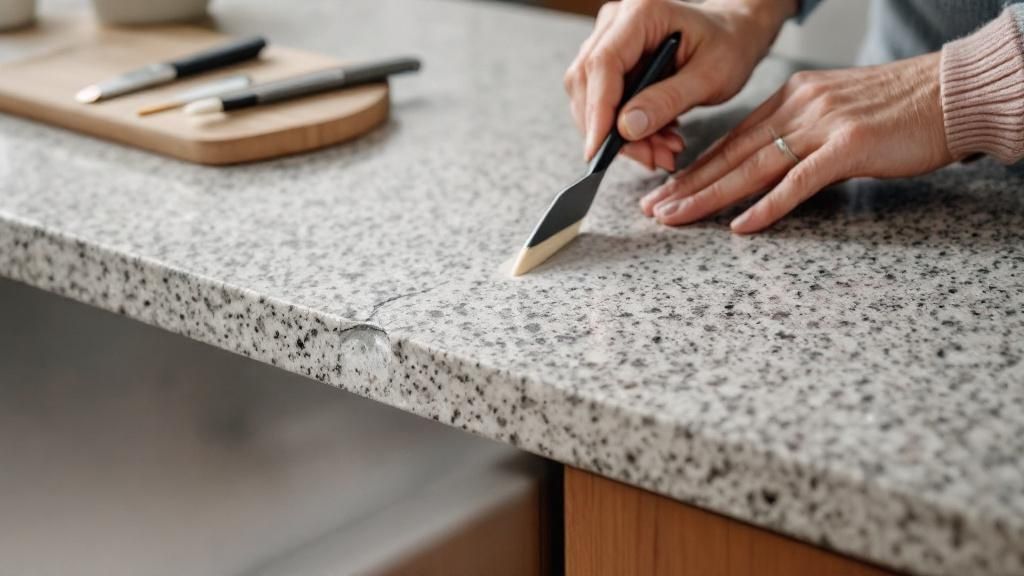
A small countertop chip can make an otherwise good kitchen or bathroom surface look worn. Replacement isn’t always necessary. Many chipped countertop edges can be disguised or repaired with a material-specific filler, adhesive, or repair kit. Before doing anything, identify whether the surface is laminate, solid surface, engineered stone, natural stone, wood, or another material.
Identify What Actually Chipped
Countertop materials fail differently. Laminate may lose a thin surface layer, while stone can break away at a corner and expose a rough edge beneath.
Inspect the surrounding area for cracks. A small isolated chip is a different problem from a crack running through the slab. Movement, sinking cabinets, or widening fractures deserve more attention than a simple cosmetic nick.
People browsing interior finish references may notice that successful repairs usually begin with identifying the existing material rather than choosing a filler based only on color.
Repair Small Laminate and Solid-Surface Chips
Clean the damaged area first. Grease, cleaner residue, and dust can prevent repair compounds from bonding.
For laminate, a color-matched repair paste may disguise a shallow chip. If a loose laminate edge is still present, the correct adhesive may allow it to be secured rather than filled.
Solid-surface materials can sometimes be repaired with manufacturer-compatible products and carefully blended afterward. Avoid aggressive sanding unless the surface material allows it, because changing the surrounding sheen can make a tiny repair appear larger.
Broader exterior surface care follows the same basic principle: material compatibility matters because fillers and coatings designed for one surface can behave poorly on another.
Handle Stone Edges More Carefully
Small chips in granite, quartz, or similar surfaces are often repaired using a color-matched resin or epoxy intended for the material. Clean and dry the chip before applying anything.
| Countertop Type | Typical Small-Chip Approach | Main Caution |
|---|---|---|
| Laminate | Repair paste | Avoid spreading beyond chip |
| Solid surface | Compatible filler | Match surrounding sheen |
| Stone | Color-matched resin | Don’t ignore nearby cracks |
| Wood | Wood filler or patch | Protect finish afterward |
A tiny edge defect can be a reasonable DIY project. A deep break around a sink, unsupported overhang, seam, or spreading crack may need professional evaluation because filling the visible opening won’t correct movement underneath.
Blend the Repair Instead of Making It Bigger
The goal isn’t to coat a wide area. Fill only the missing section and remove excess material before it fully hardens when the product instructions allow.
Color matching can take patience on patterned countertops. A slightly imperfect color in a precisely shaped repair often looks better than a perfect color spread across a large patch.
Homes with counters near doors or outdoor serving spaces also face impact from trays, tools, and furniture. General outdoor living upkeep can provide useful context for reducing the traffic and impacts that eventually reach adjacent indoor surfaces.
Where Countertop Repairs Commonly Go Wrong
Using a generic filler without checking material compatibility can leave a patch that cracks, stains, or refuses to bond. Another mistake is sanding polished stone aggressively and creating a cloudy area larger than the original chip.
Don’t treat every crack as cosmetic either. If the countertop moves when pressed, the crack keeps growing, or a heavy section lacks proper support, the visible chip may only be the easiest part of the problem to see.
Frequently Asked Questions
Can a chipped countertop edge be repaired without replacing it?
Often, yes. Small isolated chips can frequently be filled or disguised using products designed for the countertop material. Large breaks, structural movement, and expanding cracks require a different approach.
Can I use ordinary super glue on a countertop chip?
It isn’t a universal solution. Adhesive compatibility depends on the countertop material, finish, repair depth, and whether the broken piece is available. A product made for the specific surface generally gives more predictable results.
Why does my countertop repair still look obvious?
Shape, sheen, and texture can expose a patch even when the color is close. Excess filler around the chip is another common cause. Keeping the repair confined to the damaged area usually improves the appearance.
Fix the Small Defect Before It Spreads
A chipped edge doesn’t automatically justify replacing an otherwise functional countertop. Identify the surface, clean the damage carefully, use a compatible repair material, and keep the patch as small as possible. If cracking or movement extends beyond the chip, address that underlying problem instead of hiding it. A restrained repair usually looks cleaner than an oversized one.