
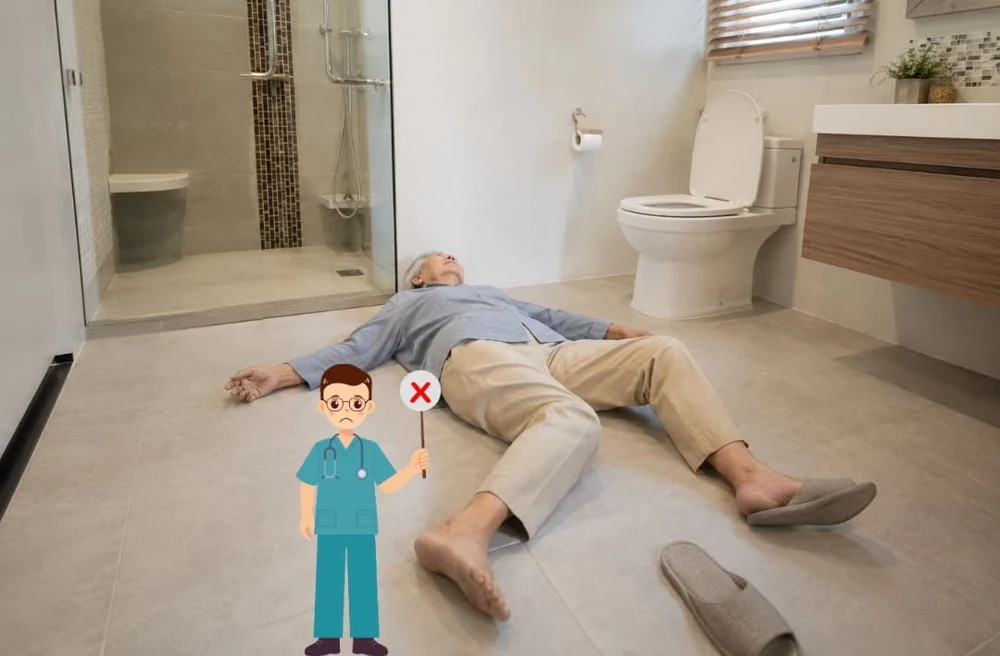
Frequent bathroom urgency can turn an ordinary trip across the house into a rushed movement, particularly for an older adult with limited mobility or poor balance. Improving bathroom access can reduce unnecessary rushing, but urgency itself also deserves attention because bladder problems can have several causes and shouldn’t automatically be dismissed as normal aging.
Why Bathroom Urgency Can Increase Fall Risk
A sudden urge may cause someone to stand quickly, move faster than usual, or take a poorly lit route at night. Those choices become riskier when combined with weakness, dizziness, vision problems, slippery flooring, or obstacles.
The National Institute on Aging notes that conditions causing rushed movement to the bathroom, including incontinence, can contribute to fall risk in older adults.
The Route to the Toilet Matters
Keep commonly used pathways uncluttered and easy to follow. Furniture, electrical cords, loose rugs, and items left on the floor can become hazards when someone is focused more on reaching the bathroom than on watching each step.
People reading everyday wellness material may find many lifestyle ideas online, but physical access deserves practical attention in the home itself. A clear route can help regardless of the underlying reason for urinary urgency.
Make Nighttime Bathroom Trips Easier
Nighttime creates extra challenges because a person may be sleepy and the home may be dark. Lighting between the bed and bathroom should be easy to activate without searching for a switch.
Grab bars installed correctly near the toilet or bathing area can offer useful support. Appropriate footwear and stable flooring also matter; socks on smooth surfaces can increase slipping risk.
| Problem | Safer Adjustment | Reason |
|---|---|---|
| Dark hallway | Add accessible lighting | Improves visibility |
| Loose rug | Remove or secure it | Reduces tripping |
| Difficult toilet access | Clear surrounding space | Limits rushed maneuvering |
| Poor stability | Add suitable supports | Provides steadier movement |
Urgency Can Have Different Causes
Frequent urgency isn’t one single condition. Urinary tract problems, constipation, medication effects, overactive bladder, mobility limitations, and several health conditions may contribute.
General healthy aging discussions can be useful for building questions, but bladder symptoms need individualized assessment when they persist or change. Keeping a brief record of bathroom frequency, urgency, leakage, nighttime episodes, and related symptoms can make a medical conversation more productive.
Avoid Solving the Problem by Becoming Dehydrated
Some people respond to urgency by drastically cutting fluids. That can create another problem, especially if fluid intake becomes inadequate.
A health professional can help determine whether the timing or type of beverages should change without encouraging unnecessary dehydration.
Where Fall-Prevention Efforts Can Go Wrong
Installing one grab bar won’t solve every risk. A bathroom can still be difficult to reach if hallways are cluttered, lighting is poor, footwear slips, or mobility aids aren’t close at hand.
Likewise, general health reading shouldn’t replace an evaluation of new bladder symptoms. Treating urgency only as a household inconvenience can delay attention to a urinary problem, while treating it only as a medical issue may overlook preventable environmental hazards. Both sides deserve attention.
When Does Bathroom Urgency Need Medical Attention?
Discuss new, persistent, or worsening urinary urgency with a health professional, particularly when it affects sleep, daily activity, continence, or safe mobility. Evaluation may include a symptom history, medication review, urine testing, and other assessment based on the situation.
Seek prompt care for blood in the urine, inability to pass urine, significant pelvic or flank pain, painful urination with concerning illness symptoms, or a sudden major change in bladder function. Falls causing injury also require appropriate evaluation.
Frequently Asked Questions
Is frequent urination always part of normal aging?
No. Bladder function can change with age, but frequent urination or strong urgency can also have treatable causes. A noticeable new pattern deserves discussion with a health professional rather than being automatically attributed to getting older.
Should someone with nighttime urgency use a bedside commode?
It may be helpful for certain people with significant mobility limitations, but suitability depends on the individual and home environment. Placement, stability, transfer ability, hygiene, and professional recommendations should all be considered.
Can better lighting really reduce bathroom-related falls?
Better visibility can remove one important environmental risk, particularly during nighttime trips. Lighting works best as part of a broader approach that also considers clutter, flooring, balance, footwear, medications, vision, and the cause of bathroom urgency.
Make the Bathroom Trip Less Rushed
The safest approach addresses both the symptom and the environment. Clear the route, improve lighting, provide appropriate supports, and avoid relying on speed to reach the toilet. At the same time, have persistent or changing urgency evaluated so a potentially manageable bladder problem isn’t overlooked.
This article is for general informational purposes and is not a substitute for professional medical advice, diagnosis, or treatment.


