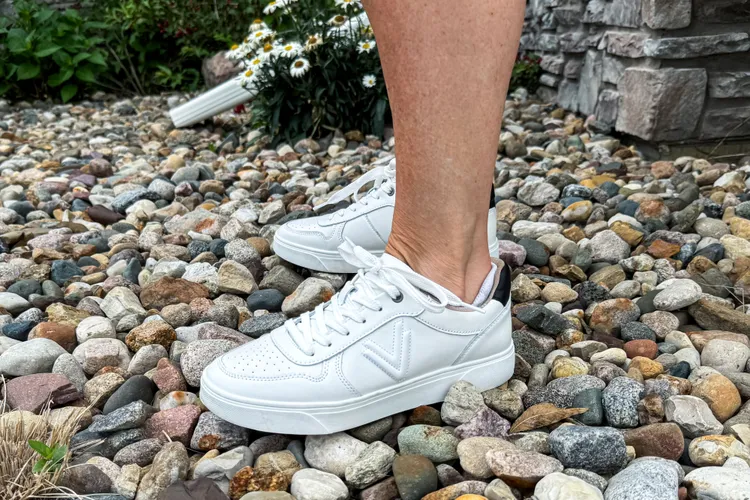
Stiff sneaker soles can make ordinary walking feel awkward because the shoe may resist the natural bending motion that occurs as you roll from heel to forefoot. Some structure is useful, but excessive rigidity can make a casual walking shoe feel heavy or restrictive.
The goal isn’t to find the softest sneaker possible. It is to choose flexibility in the right place while retaining enough support for your intended use.
Understand Where a Walking Shoe Should Bend
A walking sneaker usually needs to flex near the forefoot, around the area where your toes naturally bend. It shouldn’t fold freely through the middle like a piece of fabric.
Hold the heel with one hand and press the toe upward with the other. Moderate resistance is normal. If bending the forefoot takes considerable force, the shoe may feel demanding during longer walks.
Flexibility and Softness Aren’t the Same
A thick cushioned sole can still bend reasonably well, while a thinner sole can feel surprisingly rigid. Judge the movement of the whole shoe rather than assuming cushioning automatically creates flexibility.
This distinction is easy to miss when current style inspiration draws your attention toward appearance first. A sneaker can look ideal for casual outfits yet still feel unsuitable for regular walking.
Match Sole Construction to Your Routine
Short errands, commuting, neighborhood walks, and long days on your feet place different demands on footwear. A rigid shoe may be tolerable for brief use but become tiring when you cover more distance.
Some stiffness can be helpful for activities requiring a firmer platform. That’s the tradeoff: the most flexible option isn’t automatically suitable for every task.
| Sole Feature | Walking Effect | What to Consider |
|---|---|---|
| Moderate forefoot flex | Easier roll forward | Good everyday balance |
| Very rigid forefoot | Restricted movement | May feel tiring |
| Extremely soft sole | Easy bending | May lack structure |
| Heavy thick sole | More material underfoot | Can add walking effort |
Test the Shoe Before Depending on It
Walk across a hard indoor surface and notice whether your stride feels natural. Pay attention to the point where your heel lifts and your toes prepare to push off.
A sneaker that forces your foot to work around the sole rather than with it may not improve much with ordinary wear. Browsing clothing and layering ideas can help coordinate the finished look, but comfort testing should happen before style becomes the deciding factor.
If possible, test both slow walking and a slightly quicker pace.
Give New Shoes a Fair but Limited Break-In Period
Some sneaker materials loosen slightly with use. That doesn’t mean every painfully rigid sole will transform into a flexible walking shoe.
Wear a new pair indoors for short periods before committing to a full day. If the upper softens but the sole continues fighting your normal stride, the basic construction may simply be wrong for your needs.
When considering alternatives, classic outfit references can broaden styling options without forcing you to stay with one uncomfortable sneaker shape.
Where People Often Go Wrong
The biggest mistake is assuming stiffness equals quality. A firm shoe can be durable and supportive, but rigidity by itself says little about whether it will be comfortable for everyday walking.
The opposite assumption also causes trouble. A sneaker that twists and folds with almost no resistance may feel pleasant initially yet provide less structure than some walkers prefer. The useful middle ground depends on your activity, foot shape, and comfort.
Frequently Asked Questions
Do stiff sneaker soles soften over time?
Some materials become slightly more flexible after repeated wear, especially around natural bending points. Major structural stiffness usually changes less, so don’t rely on a painful or awkward shoe becoming completely different after break-in.
How can I test sneaker flexibility in a store?
Gently press the toe upward while holding the heel and watch where the shoe bends. Then walk in both shoes. A walking sneaker should allow a comfortable forefoot roll without feeling uncontrolled through the middle.
Are flexible sneakers better for long walks?
They can be more comfortable when they support natural forefoot movement, but flexibility is only one factor. Fit, cushioning, weight, traction, support, and the walking surface also influence how a shoe performs over distance.
Choose Movement Over Appearance Alone
A walking sneaker should cooperate with your stride rather than make every step feel like work. Test the forefoot bend, walk in the shoes before committing, and consider how much structure your routine actually requires.
Stiff sneaker soles aren’t automatically bad, but if rigidity consistently makes your stride uncomfortable, a more appropriately flexible design is usually the smarter everyday choice.